December 2024
Problem Statement
Audiologists face fragmented workflows when creating custom hearing aids juggling multiple disconnected systems for patient management, 3D scanning, modeling, printing, and post-processing. This disjointed process leads to increased production time, higher error rates, and diminished patient satisfaction. The traditional hearing aid manufacturing pipeline lacks real-time monitoring and seamless data flow between stages.
Discovery
Through interviews with 15+ audiologists and observation of clinical workflows, we identified critical pain points:
Time Inefficiency: Audiologists spent 40% of their time switching between different software platforms
Data Silos: Patient information and manufacturing data lived in separate systems with no synchronization
Quality Control: No real-time monitoring of 3D printing and post-processing stages
Scalability Issues: Manual handoffs between process stages limited daily patient capacity
Key insight: Audiologists needed a unified platform that could orchestrate the entire hearing aid creation process while maintaining visibility across all connected devices.
Process
Our design approach focused on creating an integrated ecosystem:
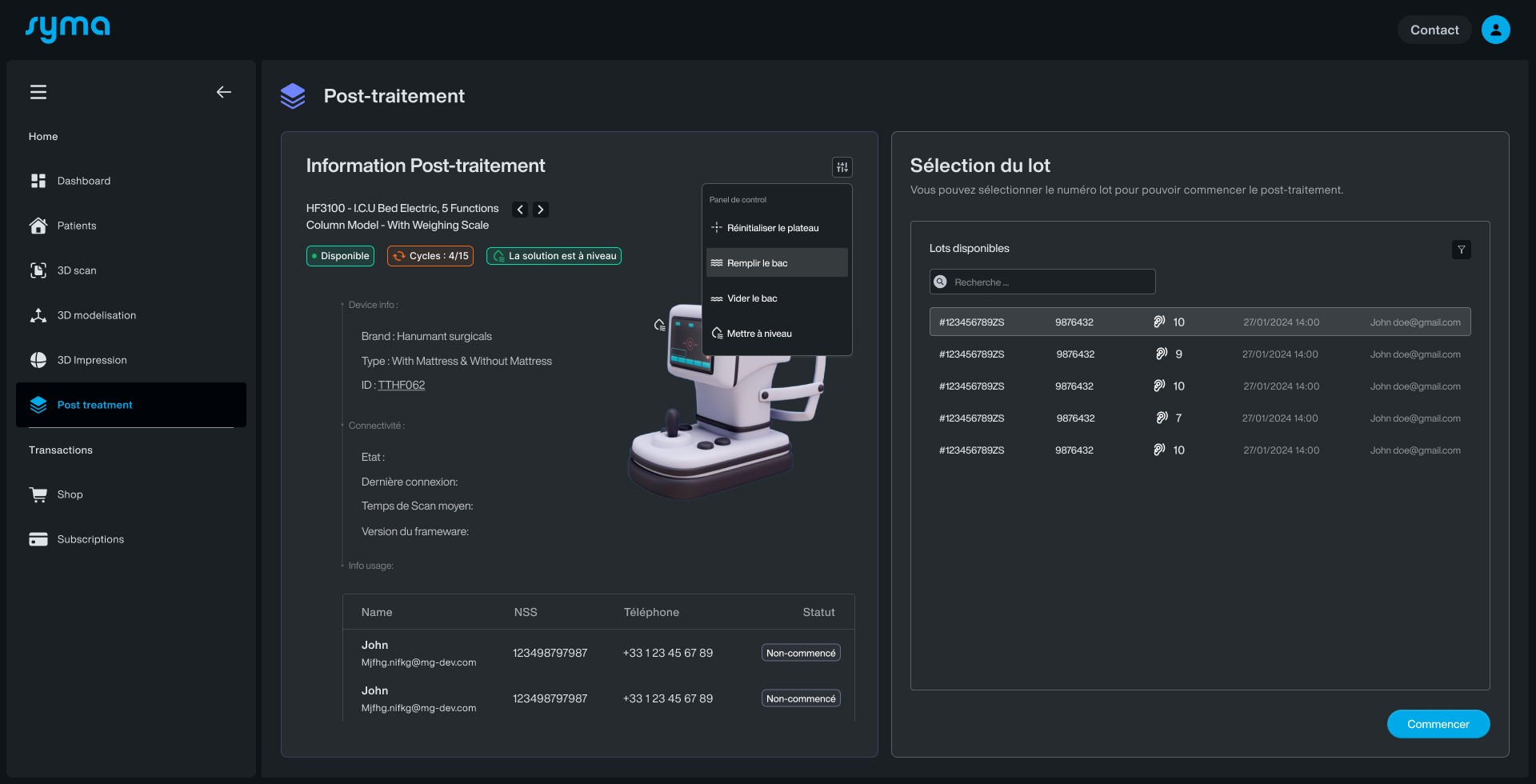
Information Architecture: Mapped the complete patient-to-product journey, identifying 5 core modules (Patient Management, Scanning, AI Modeling, 3D Printing, Post-Processing).
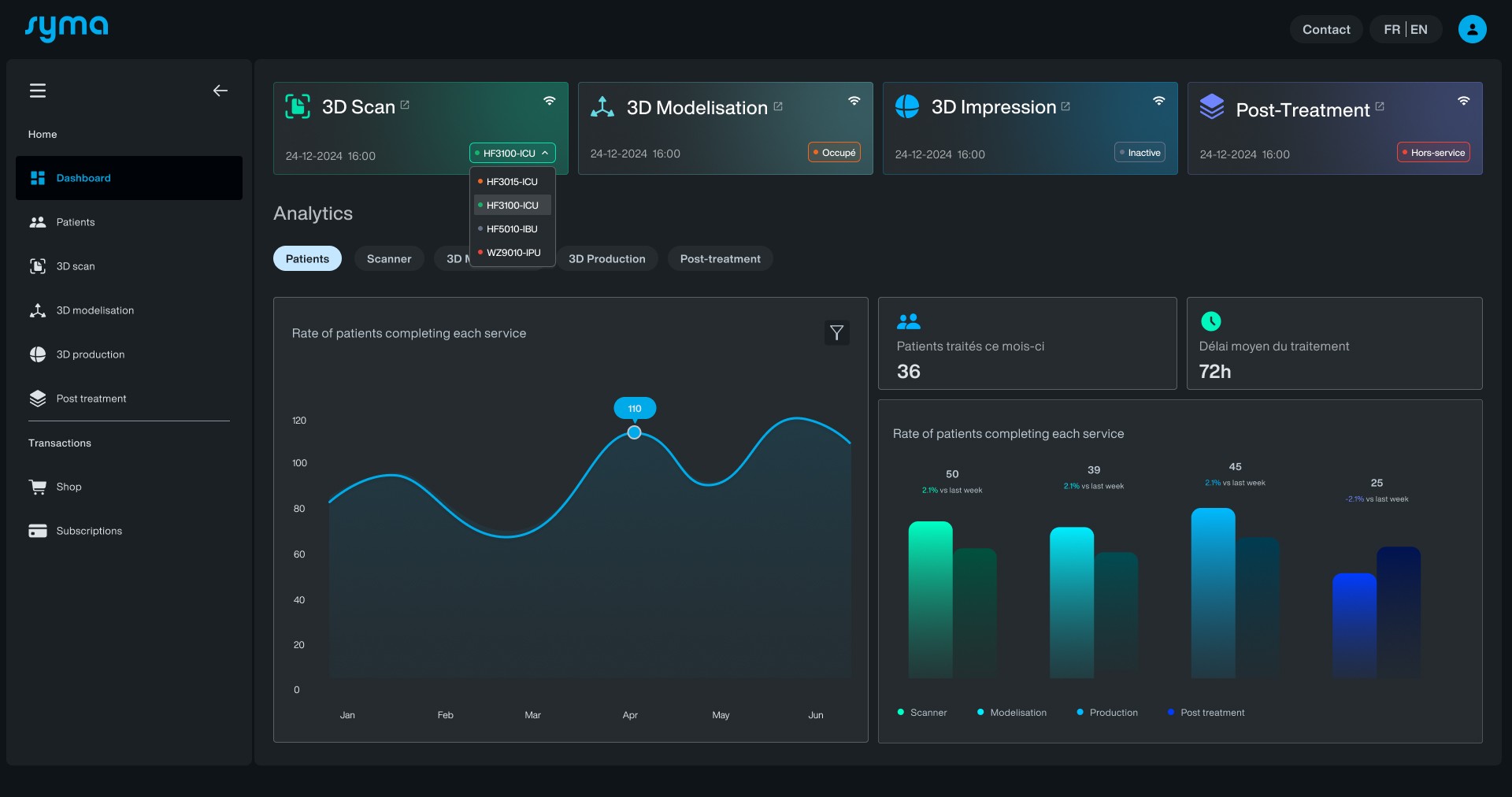
IoT Integration Design: Developed a real-time dashboard showing status across all connected devices with predictive maintenance alerts
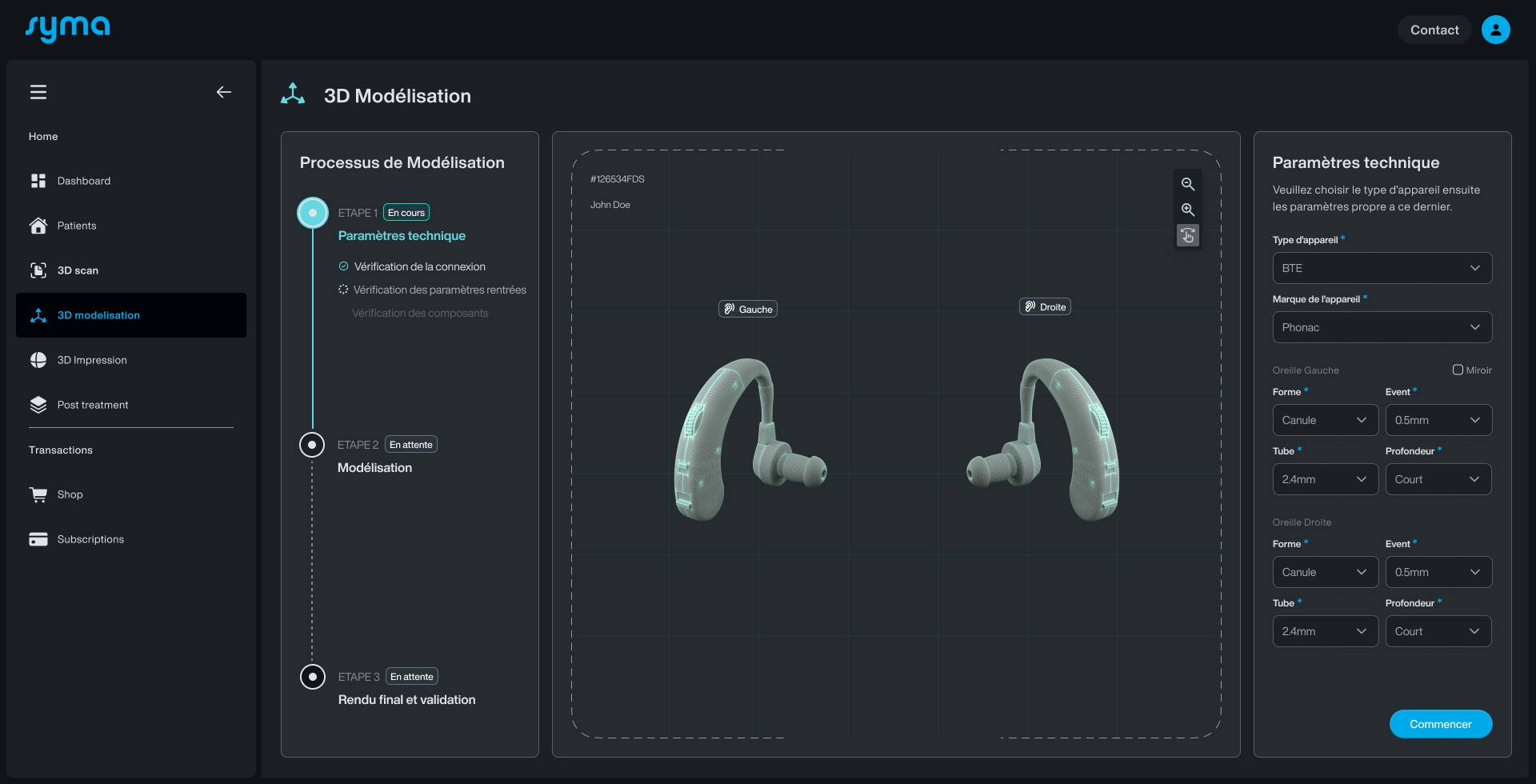
AI-Powered Modelling: Designed an intuitive interface for AI-assisted ear mould customization, reducing modelling time by 80%
Progressive Disclosure: Created role-based views allowing technicians to focus on production while audiologists maintained patient oversight
Iterative Testing: Conducted 3 rounds of usability testing with audiologists, refining the workflow based on real clinical scenarios.
Solution
Syma delivers a comprehensive B2B SaaS platform that unifies the entire hearing aid manufacturing pipeline:
Core Features:
Centralized Patient Hub: Complete patient profiles with hearing test results, scan history, and device records
Smart Manufacturing Queue: AI-optimized production scheduling across multiple IoT-connected devices
Real-time Monitoring: Live status updates from 3D printers and post-processing equipment with automated alerts
Quality Assurance: Built-in checkpoints with image recognition to verify print quality before delivery.
The platform transforms hearing aid manufacturing from a fragmented manual process into a streamlined, data-driven operation that improves both clinical efficiency and patient outcomes.

Abderraouf Dadci
Product Designer
Available